From Hard Drive to Heirloom: Giving Your Professional Portraits a Life Beyond the Screen
The moment a client receives their final portrait gallery is, in many respects, not an ending but a beginning. The images have been created, refined, and delivered — but their purpose is only realized when they move from a digital folder into the actual texture of daily life. At SJM Photography, one of the most consistent observations we carry from year to year is this: the clients who derive the greatest satisfaction from their investment are the ones who make deliberate choices about how their images will be used, displayed, and preserved.
This guide is a practical resource for doing exactly that.
Understanding the Limitations of Digital-Only Storage
Digital files are extraordinary in their convenience and their fragility in equal measure. A hard drive fails. A cloud service changes its terms or discontinues a product. A phone is lost or replaced, and with it, the locally stored copies of images that were never properly backed up. The digital landscape is littered with photographs that existed only in one place and then ceased to exist at all.
For images that carry genuine personal or professional significance — a family portrait, a milestone event, a personal branding session — relying exclusively on digital storage is a risk that is easily mitigated. The first step toward preserving professional photography is establishing a redundant backup system: ideally, a local external hard drive, a secondary cloud storage account, and a physical print archive. This is not overcaution. It is the minimum standard for images intended to endure.
The Art of Wall Curation
Printed wall art is perhaps the most powerful way to integrate professional photography into daily life. A well-selected portrait displayed at the right scale in the right location does not merely decorate a space — it anchors it. It communicates something about the people who inhabit the room and the relationships they value.
The key to effective wall curation is intentionality. Rather than selecting a single image and hanging it wherever wall space exists, consider the relationship between image content, room function, and viewing distance. A large-format family portrait works beautifully in a living room or entryway, where it will be seen regularly and at a comfortable distance. A more intimate portrait — a close detail, a quiet expression — may be better suited to a hallway or personal office, where it will be encountered individually rather than as part of a crowd.
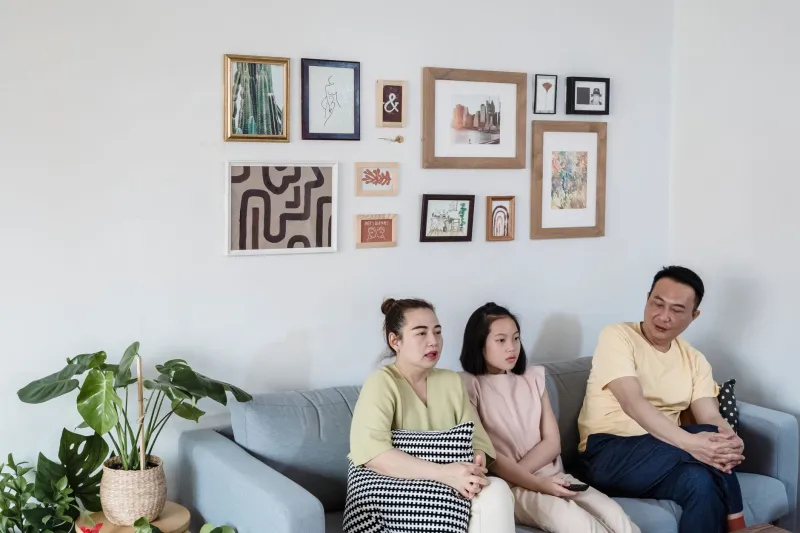
Gallery walls, when thoughtfully assembled, allow multiple images from a single session or across multiple sessions to create a narrative arc. A mix of sizes, with consistent framing or a deliberate variation in frame style, can tell a family's story across years in a single wall arrangement. Many professional photographers, including the team at SJM Photography, offer wall art consultation as part of their service — a resource worth utilizing before purchasing frames or committing to a layout.
For print quality, the medium matters. Fine art paper prints, metal prints, and canvas each carry distinct visual characteristics and longevity profiles. Archival-quality printing, using pigment-based inks and acid-free materials, produces images rated to last well over a hundred years without significant fading — a meaningful distinction for photographs intended to become family heirlooms.
Album Design as Narrative Architecture
A professionally designed album occupies a different space in the ecology of portrait preservation than a wall print. Where wall art is ambient and always visible, an album is intimate and deliberate — something reached for, opened, and shared. It is also one of the most durable physical formats available, with flush-mount albums printed on archival paper and bound in quality materials lasting generations with appropriate care.
The design of an album should reflect the story the images tell rather than simply arranging them chronologically. A skilled album designer — many professional photographers offer this service or partner with dedicated designers — considers pacing, image pairing, use of white space, and the emotional arc of the sequence. The result is something qualitatively different from a digital slideshow or a printed contact sheet: it is a curated artifact.
For families, albums organized around specific milestones — a child's early years, an annual family portrait tradition, a significant event — become reference points that future generations will return to with increasing appreciation. For professionals, a personal branding album can serve as a tangible portfolio piece, something left on a desk or offered to a prospective partner in a way that a digital link cannot replicate.
Digital Legacy Planning for the Modern Era
Beyond physical formats, the concept of digital legacy planning has gained traction among families thinking seriously about how their visual history will be accessed and shared across generations. This involves more than backup redundancy — it encompasses decisions about who holds access credentials, how files are organized and labeled, and what instructions exist for future family members who may inherit a digital archive.
Practical steps include organizing image folders by year and event with clear naming conventions, storing access information for cloud accounts in a secure but accessible location such as a password manager shared with a trusted family member, and periodically migrating files to current storage formats as technology evolves. A JPEG file created today will be readable for the foreseeable future, but storage media — DVDs, certain proprietary formats — can become obsolete within a decade.
Some families choose to work with professional archivists or use dedicated family history platforms designed to hold photographs, documents, and contextual information together in a format intended for multi-generational access. These services, while an additional investment, provide a structured approach to the digital legacy question that ad hoc folder organization cannot.
Social Media as a Starting Point, Not an Endpoint
Social media platforms serve a genuine purpose in the life of professional photography — they allow images to be shared broadly, to communicate a professional identity, and to mark moments publicly. But they are a poor archive and an imperfect display medium. Compression algorithms reduce image quality. Platform policies change. Accounts are deactivated.
The most productive relationship with social media, from a photography investment standpoint, is to treat it as one distribution channel among many rather than the primary home for professional images. Share selectively and intentionally. Link back to a personal website or portfolio where full-resolution versions live. And always ensure that the original, uncompressed files are preserved in a format that does not depend on any platform's continued existence.
The Return on an Intentional Display Strategy
Professional photography is an investment in imagery that carries lasting emotional, professional, and historical weight. The return on that investment is maximized not simply by the quality of the session but by the deliberateness with which the resulting images are used, displayed, and preserved.
At SJM Photography, we encourage every client to approach the post-delivery phase with the same intention they brought to booking the session itself. The photographs exist. The question worth asking is: where will they live, and who will they serve, for the years and decades ahead?