The Weight of a Single Frame: Why Great Event Photography Is an Act of Preservation
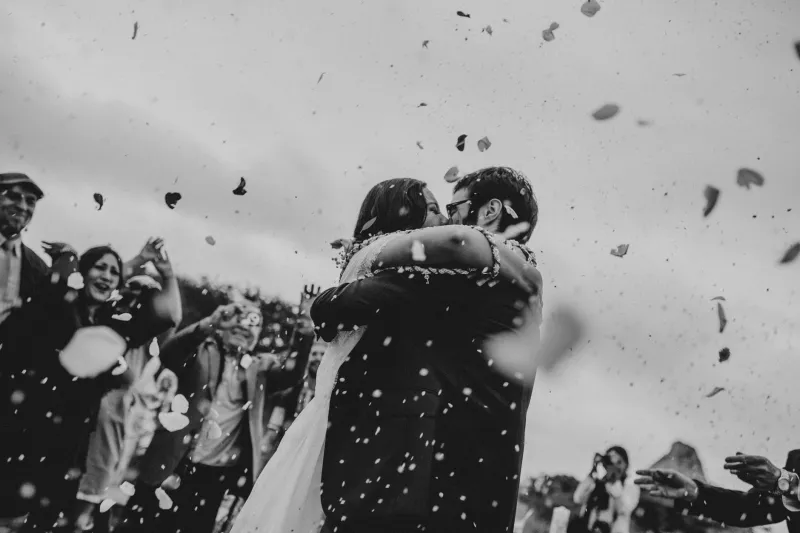
There is a photograph hanging in my grandmother's hallway — a black-and-white image from her wedding day in 1962. The resolution is modest by contemporary standards. The composition is imperfect. Yet every person who passes it pauses. Something in that image transcends the technical. It breathes. It carries within its borders the full weight of a moment that, for everyone present that day, changed the course of their lives.
This is the paradox at the heart of event photography: the best images are not the ones that merely document what occurred. They are the ones that make you feel what it was like to be there.
The Gap Between a Snapshot and a Story
Every smartphone in America can produce a technically adequate photograph. Autofocus systems are remarkably sophisticated. Computational photography has democratized the ability to capture a clear, well-exposed image in almost any condition. And yet, for all of this technological progress, the gap between a forgettable snapshot and a genuinely moving photograph has never been wider.
The reason is simple: great event photography is not fundamentally about equipment. It is about perception — the ability to read a room, anticipate an emotional peak, and position oneself in precisely the right place at precisely the right instant. It is the skill of rendering the invisible visible: the trembling hand of a father before he walks his daughter down the aisle, the fleeting look exchanged between two colleagues at a retirement celebration, the unguarded laughter of a child at a community festival in the heartland.
These are the images that endure. These are the moments that, when revisited decades later, collapse the distance between past and present in a single breath.
Composition as Emotional Architecture
A photograph's composition is not merely an aesthetic choice — it is an act of interpretation. The decision to place a subject at the edge of the frame rather than the center, to allow negative space to breathe around a solitary figure, or to frame a celebration through the shoulders of watching guests — each of these choices shapes the emotional experience of the viewer.
At SJM Photography, we approach composition not as a formula but as a conversation with the scene itself. Every event has its own visual grammar, its own rhythm of movement and stillness, its own architecture of meaning. A wedding in a sunlit vineyard in California speaks differently than a corporate gala in a Chicago ballroom, and the compositional language used to honor each must reflect that difference.
The rule of thirds, leading lines, and layered foreground elements are tools — valuable ones — but they serve a higher purpose: directing the viewer's eye toward the emotional truth of the moment.
Light as the Language of Memory
If composition is the architecture of a photograph, light is its atmosphere. The golden hour glow of a late-afternoon outdoor ceremony carries a warmth that no studio strobe can fully replicate. The cool, dramatic contrast of a corporate awards evening under chandeliers creates a sense of occasion and gravity. Even the soft, diffused light of an overcast afternoon at a graduation ceremony has its own quiet poetry.
Understanding light — its direction, its quality, its color temperature, and its relationship to the subjects within it — is one of the most demanding and rewarding disciplines in photography. It requires not just technical knowledge but a kind of visual empathy: the ability to see how light falls on a human face and understand what that light is saying about the person within it.
For event photographers, the challenge is compounded by the fact that light is rarely controllable. Conditions shift without warning. Venues present contradictory challenges. The ability to adapt — to find the light within the available light — is a hallmark of genuine expertise.
The Instinct That Cannot Be Taught
Technique can be learned. Equipment can be mastered. But the instinct that separates a competent event photographer from an exceptional one is something more elusive. It is the capacity to be fully present in a space — to observe without intruding, to anticipate without controlling, and to recognize the significance of a moment before it has fully revealed itself.
This instinct is cultivated through experience, through thousands of hours spent in the midst of human celebrations and milestones. It is the reason that the most memorable images from weddings, graduations, and community events across the United States are rarely the formally posed ones. They are the candid frames — the ones captured between the planned moments, in the margins of the official program, where real human emotion lives.
What SJM Photography Brings to Every Event
At SJM Photography, our philosophy is rooted in a profound respect for the significance of the events we are trusted to document. Whether we are photographing an intimate backyard anniversary celebration in rural Tennessee or a large-scale corporate conference in downtown Los Angeles, we arrive with the same commitment: to see the story that is unfolding and to capture it with honesty, artistry, and care.
We invest time before every engagement in understanding the nature of the event, the people at its center, and the moments most likely to carry lasting emotional resonance. We communicate closely with our clients not to script the photography but to ensure that nothing of consequence goes unwitnessed.
And when the event concludes and the guests have gone home, the work of selection and editing begins — a process guided not by volume but by meaning. We ask of every image: does this frame tell the truth? Does it honor the moment? Will it matter in twenty years?
Photographs as Generational Gifts
The images produced at life's most significant events are, ultimately, gifts — not just to the people who were present, but to those who come after. Children who were not yet born when their parents married. Grandchildren who will one day inherit the visual record of a family's history. Future colleagues who will look back at the founding moments of an organization they now lead.
This is the responsibility that every serious event photographer carries into every assignment. The camera is not merely a recording device. In the right hands, on the right day, it is an instrument of preservation — capturing, in a fraction of a second, something that would otherwise be lost to time.
At SJM Photography, we consider it the highest privilege of our craft.