The Quiet Between Poses: What Unguarded Moments Reveal About the People We Photograph
There is a peculiar irony embedded in portrait photography: the harder a subject tries to look their best, the more elusive that goal becomes. Stiff shoulders, a slightly too-wide smile, eyes that betray self-consciousness rather than confidence — these are the hallmarks of someone performing for a lens rather than simply existing in front of one. At SJM Photography, our approach to portraiture is rooted in a fundamental understanding of this tension, and in the deliberate craft required to dissolve it.
The Physiology of a Forced Smile
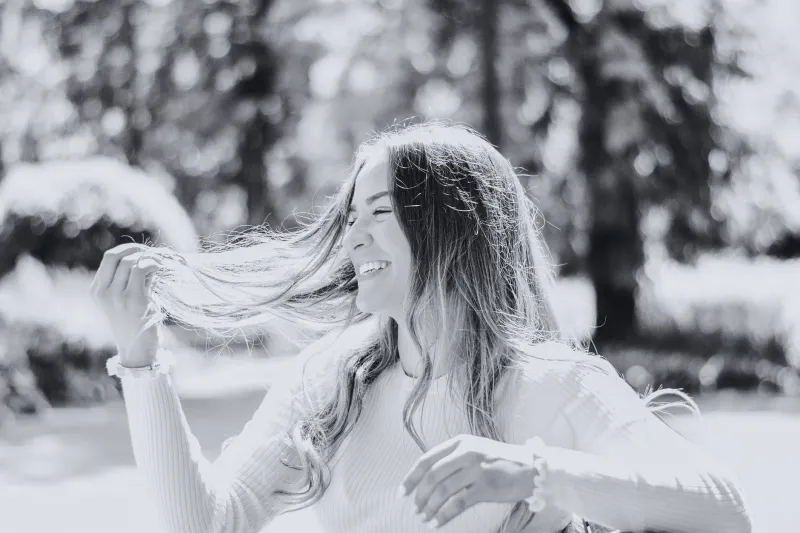
Scientists have long distinguished between two categories of smiling. The voluntary smile — the kind summoned on command — is produced by the zygomatic major muscle alone, pulling the corners of the mouth upward in a shape that is technically correct but emotionally hollow. The involuntary smile, by contrast, recruits an additional muscle around the eyes called the orbicularis oculi, creating the subtle crinkling that photographers and psychologists alike recognize as genuine warmth.
This distinction, often called the Duchenne marker, is something human beings detect instinctively. Viewers looking at a photograph can sense the difference within fractions of a second, even if they cannot articulate why one image feels more alive than another. The implication for portrait photography is significant: no amount of instruction to "smile naturally" will produce the neurological conditions for a Duchenne smile. Those conditions must be created through environment, conversation, and trust.
When a subject is asked to hold a pose, the brain shifts into a mode of active self-monitoring. The prefrontal cortex — responsible for self-awareness and social evaluation — becomes highly engaged. This is precisely the wrong state for authentic expression. Genuine emotion requires a degree of cognitive surrender, a moment when the subject is absorbed in something other than how they appear.
How Professional Photographers Engineer Authenticity
This is where the craft of professional portraiture distinguishes itself from simply pointing a camera at someone. Skilled photographers do not merely capture moments — they construct the conditions under which genuine moments become possible.
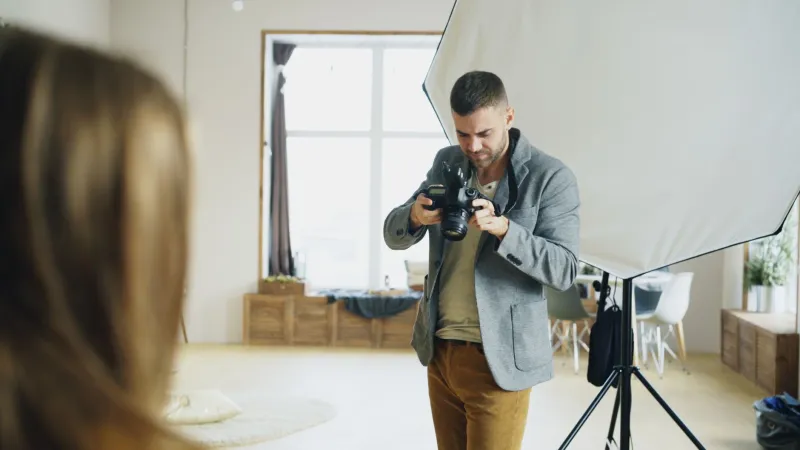
At SJM Photography, this process begins well before the shutter opens. Conversations during setup, questions about a client's work or family, a deliberate unhurried pace — all of these lower the psychological defenses that produce stiff, performative imagery. The goal is not to trick a subject but to redirect their attention. When someone is genuinely laughing at something said during a session, or genuinely thinking through an answer to a meaningful question, the face does something no pose chart can replicate.
Timing is equally critical. The instinct of many photographers — and nearly every subject — is to regard the moment immediately after a direction is given as the "real" moment. In practice, the most compelling frame is often captured three seconds later, when the subject has partially released the constructed expression and something truer has begun to surface. These marginal moments, the exhale after the effort, are frequently where the best work lives.
The Role of Environment in Emotional Release
Physical surroundings exert a measurable influence on psychological state. A subject seated in an unfamiliar studio under bright artificial lights is physiologically primed for alertness and self-consciousness. A subject standing in a location that carries personal meaning — a neighborhood they love, a workspace that reflects their identity — is more likely to inhabit their own skin with ease.
This is one reason SJM Photography invests significant time in location consultation before sessions. The right environment does not merely provide an attractive backdrop; it provides psychological permission to relax. Familiarity breeds ease, and ease is the soil from which authentic expression grows.
Natural light, discussed at length in other pieces on this site, plays a complementary role. Soft, directional light is not only more flattering in technical terms — it also tends to feel less clinical to the subject, which subtly reduces the sense of being scrutinized.
Why Clients Are Often Surprised by Their Favorite Images
One of the most consistent patterns in professional portrait work is the gap between what clients expect to love and what they actually choose when reviewing their gallery. Subjects frequently anticipate that their preferred images will be the ones where they felt most composed and intentional. In practice, they are drawn again and again to frames they barely remember being taken — a glance to the side, a half-laugh, a moment of quiet thought.
This is not coincidence. Those images succeeded precisely because the subject was not trying to succeed in them. The absence of effort produced the presence of personality.
For anyone preparing for a portrait session, whether for personal branding, a family milestone, or a professional headshot, this insight carries a practical message: your most important job is not to look good. Your most important job is to show up, engage, and allow the process to unfold. The photographer's job is to recognize the moment when something true surfaces — and to be ready when it does.
Reframing What a Portrait Is Supposed to Do
A portrait, at its finest, is not a record of how someone looked on a given afternoon. It is a distillation of how someone is — their particular quality of presence, the texture of their personality, the way their face moves when they are genuinely engaged with the world. Capturing that requires both technical mastery and a deep understanding of human psychology.
At SJM Photography, every session is built around the conviction that the best image is almost never the most deliberate one. It is the one that happened quietly, in the pause between instructions, when the subject forgot they were being photographed and simply became themselves.