Beyond the Rule of Thirds: How Intentional Composition Transforms a Subject Into a Story
Most people, when asked what makes a photograph compelling, will point to lighting or expression. Both matter enormously. Yet the element that quietly governs every powerful image—the invisible architecture beneath the surface—is composition. It is the grammar of visual communication, and when it is executed with intention, it does something remarkable: it tells a story without a single word.
At SJM Photography, composition is never an afterthought. It is the first conversation we have with a frame, long before the shutter releases. Understanding how these choices are made—and why they matter to you as a client—offers a window into what separates a professional photograph from a technically adequate one.
The Limits of a Single Rule
The rule of thirds is perhaps the most widely taught principle in photography, and for good reason. Placing your subject off-center creates natural tension and visual interest that a centered composition often lacks. But treating it as the only compositional tool available is like knowing one chord and calling yourself a musician.
Professional composition draws from a much wider vocabulary. Leading lines direct the viewer's gaze through the image toward the subject. Negative space provides breathing room that amplifies emotional weight. Foreground elements add depth and context. Overlapping layers suggest dimension. Each of these techniques carries its own communicative power, and the most effective images layer several of them simultaneously.
The result is not just a photograph that looks good—it is one that feels purposeful.
Leading Lines and the Architecture of Attention
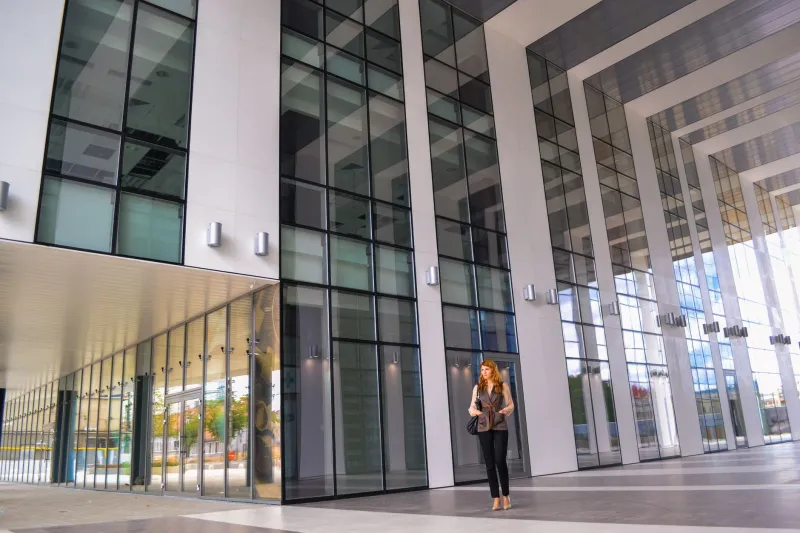
Consider a personal branding session conducted in a downtown Chicago office building. The hallway leading to the subject's workspace featured long, converging lines formed by the ceiling, floor, and walls. Rather than positioning the client against a neutral backdrop, SJM Photography placed her at the natural vanishing point of those lines—a compositional choice that drew every viewer's eye directly to her face before they consciously registered why.
This is what leading lines accomplish: they create an invisible path that guides attention with quiet authority. In architectural settings, those lines might be structural. In outdoor environments, they could be a fence row, a shoreline, or even the edge of a shadow. The photographer's task is to identify them and position the subject in deliberate relationship to them.
For personal branding clients especially, this technique communicates confidence and intentionality. The viewer is not wandering through the frame—they are being escorted directly to the person who matters.
Depth of Field as Emotional Emphasis
Depth of field—the range within a photograph that appears acceptably sharp—is one of the most expressive tools available to a professional photographer. A shallow depth of field isolates the subject from the background, creating a visual hierarchy that says, unambiguously, this is what deserves your attention. A deeper depth of field incorporates the environment, suggesting that context is part of the narrative.
The choice between these two approaches is never arbitrary. During a headshot session for a financial consultant in Atlanta, SJM Photography used a moderately shallow depth of field to keep the client sharp and authoritative while allowing the glass-and-steel backdrop to blur into a soft, recognizable suggestion of the financial district. The environment remained present—lending credibility and setting—without competing with the subject's presence.
Contrast this with event photography, where a deeper depth of field might capture both a speaker and a fully engaged audience, telling a story about connection and influence rather than isolation. Each choice serves a different narrative purpose, and a skilled photographer knows which story the client needs to tell.
Spatial Relationships and the Tension Between Elements
Where a subject sits within a frame in relation to other elements—objects, architecture, other people—communicates hierarchy, relationship, and scale in ways that viewers absorb instinctively. A CEO photographed small within a vast boardroom reads differently than the same person filling the frame entirely. Neither is wrong; they simply tell different stories.
In one SJM portfolio session with a nonprofit executive director, the decision was made to photograph her standing near—but not at—the head of a conference table surrounded by empty chairs. The spatial arrangement communicated leadership without requiring a caption. The empty chairs implied the team she leads. The slight distance from the head position suggested collaborative rather than authoritative leadership. Every inch of that spatial relationship was intentional.
This kind of deliberate placement is what elevates a professional portrait beyond a likeness. It becomes a visual argument about who this person is.
Negative Space: The Power of What Is Not There
Among the most underappreciated compositional tools is negative space—the deliberate inclusion of empty or minimal areas around a subject. Western audiences, accustomed to information-dense visual environments, often respond to negative space with an almost subconscious sense of calm and clarity. It signals confidence. It removes distraction. It forces the eye to rest on what remains.
For personal branding clients who operate in competitive, visually noisy industries, a portrait that employs generous negative space can communicate something their competitors' headshots do not: composure. The absence of clutter becomes a statement about how this professional operates.
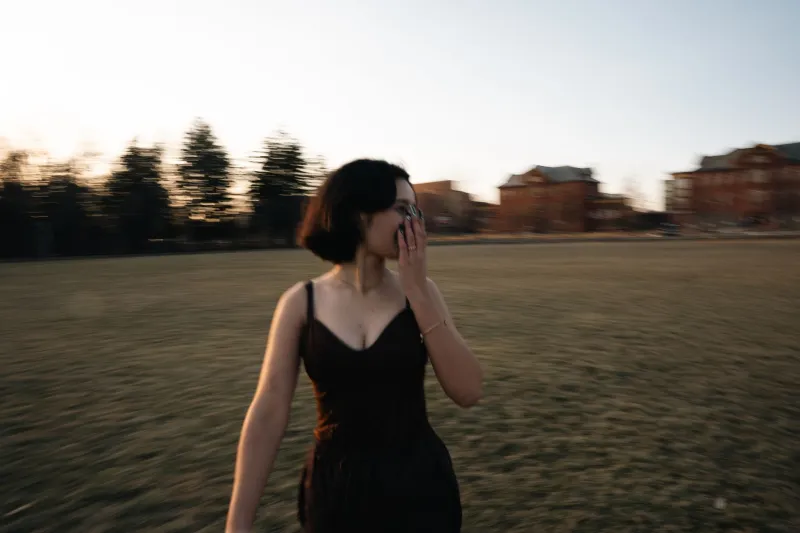
SJM Photography frequently employs this technique during outdoor sessions, using open sky or blurred natural landscapes as expansive, undemanding backgrounds that allow a subject's expression and posture to carry the full weight of the image.
Why Composition Matters to You as a Client
If you are considering professional photography—whether for a personal brand refresh, a corporate headshot, or an event—understanding composition helps you recognize the value of what you are investing in. A professional photographer is not simply someone with expensive equipment and a good eye for light. They are a visual strategist, constructing images with layers of intentional meaning.
When SJM Photography approaches a session, the compositional decisions begin during the pre-shoot consultation, not on the day of the shoot. Locations are scouted for their architectural lines, their depth potential, their spatial possibilities. Every environment is read as a set of compositional opportunities waiting to be activated.
The photographs that result from this process do more than document a moment or produce a presentable headshot. They communicate a story—your story—in a visual language that audiences absorb before they can articulate why an image resonates with them.
The Invisible Work Behind Every Frame
There is a reason that great photographs feel effortless. The compositional decisions that shape them are so thoroughly integrated that they disappear, leaving only the emotional response they were designed to produce. That invisibility is the goal. When a viewer looks at a well-composed image and simply feels something—confidence, warmth, authority, approachability—they are experiencing the cumulative effect of dozens of deliberate choices made by the photographer.
At SJM Photography, that invisible work is the foundation of everything we produce. Capturing moments that last a lifetime requires more than a steady hand and a fast lens. It requires fluency in the unspoken language of composition—and the discipline to speak it clearly in every frame.