What Light Reveals: Using Natural Illumination to Build an Honest Visual Brand

There is a quiet conversation happening in every great photograph — one that most viewers sense but rarely articulate. It is not carried by the subject's expression alone, nor by the composition or the background. It moves through light. Specifically, it moves through the way light falls, bends, softens, and occasionally pushes back against the subject it touches.
For business owners, entrepreneurs, and professionals investing in their visual brand, understanding this conversation is not merely an artistic exercise. It is a practical necessity. Because in a marketplace saturated with polished, heavily retouched imagery, audiences have developed a finely tuned instinct for photographs that feel genuine versus those that feel manufactured. Natural light, when used with intention, is one of the most powerful tools available for landing firmly on the right side of that distinction.
The Difference Between Hiding and Revealing
A common misconception about professional photography — particularly in a commercial or personal branding context — is that the photographer's primary job is to make the subject look as flawless as possible. While skilled photographers certainly work to present their subjects favorably, the most effective brand imagery does something more nuanced: it reveals character rather than concealing it.
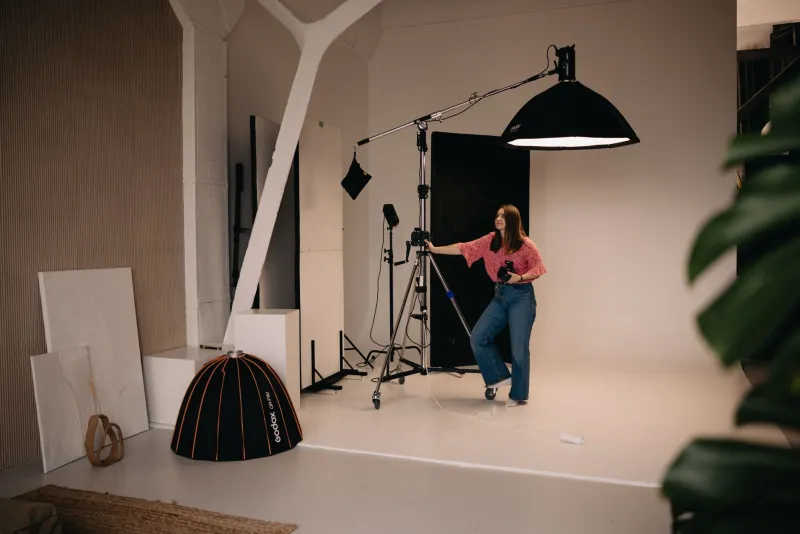
Artificial lighting rigs, when applied without restraint, can produce images that look impressive in isolation but feel oddly distant in context. The skin tones appear too even. The shadows are too precise. Everything is illuminated with an efficiency that the human eye subconsciously recognizes as unnatural. The result is a photograph that communicates competence, perhaps, but not warmth. Not approachability. Not the kind of trust that converts a potential client into an actual one.
Natural light operates differently. It is inherently imprecise — and that imprecision is precisely its strength. A shaft of morning light filtering through a window creates gradients. It emphasizes texture. It produces gentle shadows that give a face dimension and depth. These qualities do not diminish a subject; they humanize them. And in the context of personal branding, being perceived as human is not a liability. It is the entire point.
Reading the Light Before the Session Begins
Professional photographers who specialize in natural light work do not simply arrive at a location and hope for favorable conditions. They study the light long before the shutter is ever pressed. The direction of the sun at a given time of day, the quality of cloud cover, the reflective surfaces in a room, the orientation of windows — all of these variables inform decisions about timing, positioning, and location selection.
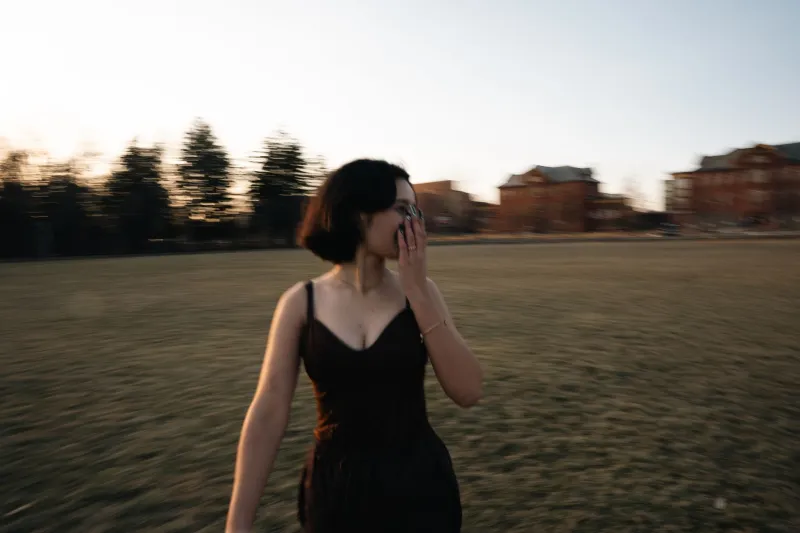
The so-called "golden hour" — the period shortly after sunrise or before sunset — has earned its reputation not by accident. During these windows, sunlight travels at a lower angle through the atmosphere, scattering in ways that produce warmer tones and softer contrasts. For portrait and branding photography, this quality of light tends to be extraordinarily flattering without appearing manipulated. It wraps around subjects rather than striking them directly, which softens hard lines while still preserving the texture and detail that give a photograph its sense of authenticity.
Overcast days, often dismissed by amateur photographers as poor conditions, are equally valuable for different reasons. A heavy cloud layer acts as a natural diffuser, distributing light evenly across a scene and eliminating harsh shadows entirely. For business professionals who want imagery that feels approachable and grounded — rather than dramatic — this kind of flat, even illumination can be remarkably effective.
Window Light and the Interior Session
Not every branding session takes place outdoors. In fact, some of the most compelling personal brand photography is captured in interior environments that reflect the professional's actual workspace — a law office, a studio, a well-designed home office. In these settings, window light becomes the primary tool, and its management requires both technical skill and an understanding of how the space communicates meaning.
North-facing windows are a longtime favorite among portrait photographers working indoors. Because they never receive direct sunlight, they provide a consistent, cool, and even illumination throughout the day. East-facing windows offer warm morning light that shifts in character as the hours pass. West-facing windows deliver that same warmth in the afternoon. Understanding these distinctions allows a photographer to schedule interior sessions with the same deliberateness they would bring to an outdoor shoot.
Beyond window orientation, the distance between the subject and the light source plays a critical role in shaping the final image. Positioning a subject close to a large window produces a dramatic falloff — bright on one side, shadowed on the other — that can convey depth and gravitas. Moving further from the window softens that contrast, producing imagery that feels more open and accessible. Neither approach is inherently superior; the right choice depends entirely on the story the brand needs to tell.
Light as a Language of Trust
At its core, the philosophy behind using natural light in brand photography is rooted in a single idea: audiences trust what they can feel. When an image looks as though it could have been taken in a real moment — in a real place, under real conditions — it activates a different kind of engagement than a photograph that announces its own production value.
This matters enormously for the American professional landscape, where consumers are increasingly skeptical of over-produced marketing imagery. Studies in visual communication consistently suggest that authenticity in brand photography correlates directly with perceived trustworthiness. A financial advisor photographed in warm, natural window light reads differently than the same advisor positioned under a studio strobe. The technical quality may be comparable, but the emotional signal is not.
For entrepreneurs, small business owners, coaches, consultants, and creatives investing in their visual identity, this distinction is worth taking seriously. The question to bring to a branding photography session is not simply, "How do I want to look?" It is, "What do I want people to feel when they see me?" Natural light, handled with intention and expertise, is one of the most reliable means of answering that question honestly.
The Photographer's Role in the Conversation
None of this happens automatically. The ability to read, interpret, and shape natural light in service of a specific narrative is a skill developed over years of deliberate practice. It requires the photographer to function as more than a technician — they must also act as a collaborator, asking the right questions about a client's brand values, target audience, and communication goals before a single frame is captured.
At SJM Photography, this collaborative process is central to every personal branding engagement. The work begins long before the session itself, with conversations about what the client does, who they serve, and what they want their visual presence to communicate. That foundation shapes every decision made on the day of the shoot — including, fundamentally, how and when and where the light will be allowed to do its work.
Because in the end, the most honest brand photographs are not the ones that show the least. They are the ones that reveal the most — the warmth, the credibility, the character — through the oldest and most reliable medium available: the light that was already there.